
Building Trust with Ethical AI

How Ethical AI Drives Consumer Trust and Brand Loyalty in 2025

In an era where technology shapes our interactions, understanding the importance of ethical AI is crucial. As brands navigate this complex landscape, prioritizing consumer trust through ethical practices can lead to sustainable success. Here’s what you will learn about building that trust.

What You Will Learn

  • The four core principles of ethical AI: fairness, transparency, accountability, and privacy.
  • How inclusive design and continuous monitoring can enhance user experience and brand loyalty.
  • The growing importance of ethical AI practices for brands aiming to build consumer trust by 2025.
  • Strategies for implementing an ethical AI framework that aligns with your brand's values and consumer rights.
  • Effective tools and resources for conducting AI audits and ensuring compliance with ethical standards.
  • The significance of transparent communication and ethical data practices in fostering consumer relationships.
  • Methods for engaging consumers through value-driven experiences and encouraging feedback to build trust.
  • Ways to incorporate trust signals in your brand strategy to strengthen consumer engagement and loyalty.

Core Principles of Ethical AI

The following outlines the foundational principles and practical applications for building trust in AI systems.

Fairness: No Discrimination

Ensuring algorithms do not discriminate against any group, fostering equitable outcomes.

Transparency: Understandable Operations

Making AI operations and decision-making processes clear and understandable to users.

Accountability: Clear Responsibility

Establishing clear responsibility for AI outcomes, often involving a human in the loop.

Privacy: Data Protection

Protecting user data and ensuring compliance with all relevant privacy regulations.

Understanding Ethical AI and Its Role in Consumer Trust

As we dive into the world of artificial intelligence, it's essential to understand the concept of ethical AI. This term encompasses the principles and practices that ensure AI systems are designed and used responsibly, prioritizing fairness, accountability, and transparency. In our mission at Positive About AI, we believe that ethical AI isn't just a buzzword; it’s the foundation for building trust with consumers in an increasingly digital landscape.

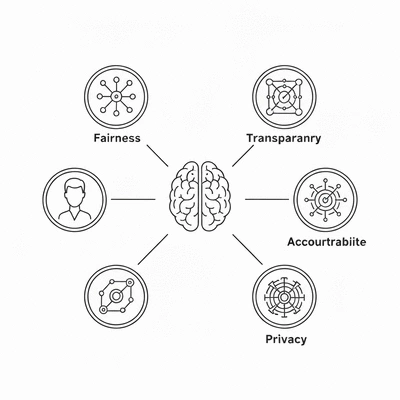
Illustration of four core ethical AI principles: fairness, transparency, accountability, and privacy, connected by lines to a central brain icon, clean image, no text, no words, no typography, 8K

By focusing on these principles, brands can foster a more positive relationship with their customers. So, what exactly are the key principles of ethical AI? Here are some to consider:

  • Fairness: Ensuring algorithms do not discriminate against any group.
  • Transparency: Making AI operations understandable to users.
  • Accountability: Establishing clear responsibility for AI outcomes.
  • Privacy: Protecting user data and ensuring compliance with regulations.

These key principles are vital for brands hoping to navigate the complexities of AI responsibly. By adopting ethical AI practices, businesses can enhance their credibility and foster a sense of trust among their consumer base.

Defining Ethical AI: Key Principles and Practices

When we talk about ethical AI, we often refer to a set of guiding principles that influence the design and deployment of AI technologies. These practices are not only essential for compliance but also help in maintaining a strong bond with consumers. As I often discuss in my articles at Positive About AI, incorporating ethical standards into AI development can lead to better outcomes for everyone.

  • Inclusive Design: Creating AI that caters to diverse user groups.
  • Continuous Monitoring: Regular audits to check for biases and inaccuracies.
  • User Empowerment: Providing users with control over their data and algorithms.

The practical application of these principles shows that ethical AI can lead to improved user experiences and customer satisfaction. This sets the groundwork for long-term brand loyalty.

Why Ethical AI Matters for Brands in 2025

Looking ahead to 2025, the significance of ethical AI will continue to grow. As consumers become more aware of AI's capabilities and limitations, their expectations will shift. Brands that prioritize ethical AI practices will not only comply with future regulations but also gain a competitive advantage. Imagine a shopping experience where AI recommends products based on genuine understanding rather than manipulative tactics.

  • Enhanced Reputation: Brands known for ethical practices will stand out.
  • Increased Customer Loyalty: Trust leads to repeat business.
  • Better Risk Management: Proactive measures can prevent reputational damage.

As Positive About AI champions the positive narrative of AI, it's clear that the brands embracing ethical AI will lead the charge in creating sustainable, consumer-centered experiences.

Exploring the Connection Between Ethical AI and Consumer Trust

The relationship between ethical AI and consumer trust is undeniable. When brands prioritize ethical considerations, they signal to their customers that they care about their welfare. This connection isn't just about compliance but about doing the right thing. Trust, once established, fosters deeper emotional bonds with consumers.

To illustrate this connection, let's look at some ways ethical AI practices can enhance trust:

  • Clear Communication: Transparent sharing of how AI is used builds confidence.
  • Ethical Data Practices: Respecting consumer privacy reinforces trust.
  • Feedback Mechanisms: Allowing customers to voice concerns improves relationships.

By aligning business strategies with ethical AI, brands can create a loyal customer base that appreciates their commitment to responsible technology use.

Pro Tip

Did you know? Implementing ethical AI practices not only ensures compliance with regulations but also enhances your brand's reputation. Brands that consistently prioritize transparency and accountability in their AI systems are likely to see increased customer loyalty and trust, leading to a stronger competitive edge in the market.

Taking Action: Implementing Ethical AI Strategies

At Positive About AI, we believe that action speaks louder than words. Implementing ethical AI strategies is vital for brands looking to foster trust and loyalty among consumers. As we navigate this evolving landscape, it’s essential for businesses to establish a robust framework that prioritizes ethics alongside innovation.

Creating an ethical AI framework involves aligning technology with your company’s values. This ensures that the AI solutions you adopt not only meet business goals but also respect consumer rights and promote fairness.

Building an Ethical AI Framework for Your Brand

To build an effective ethical AI framework, consider the following key components:

  • Define Core Values: Identify the ethical principles that resonate with your brand's mission.
  • Stakeholder Engagement: Involve diverse voices in your decision-making processes to address different perspectives.
  • Compliance Standards: Ensure your AI practices align with local and global regulations.
  • Continuous Evaluation: Regularly assess your AI tools to detect biases and improve transparency.
Illustration of a building block framework representing ethical AI, with keywords such as 'Values', 'Stakeholders', 'Compliance', and 'Evaluation' on the blocks, clean image, no text, no words, no typography, 8K

By following these steps, your brand can cultivate an environment where ethical AI thrives. This not only enhances your reputation but also fosters consumer trust.

Tools and Resources for Effective AI Audits

Conducting AI audits is crucial for maintaining the integrity of your ethical framework. Here are some essential tools and resources to help you get started:

  • AI Fairness 360: This tool helps detect and mitigate bias in machine learning models.
  • Model Cards: Use these to transparently communicate the performance of AI models to stakeholders.
  • Ethics Guidelines: Refer to established guidelines from organizations like IEEE or the EU’s Ethics Guidelines for Trustworthy AI.
  • Third-party Auditors: Consider hiring independent experts to evaluate your AI practices.

Using these resources effectively will ensure that your AI systems are not only efficient but also ethical, promoting a trustworthy relationship with consumers.

Establishing Ethical Guidelines for AI Development

As AI continues to evolve, establishing clear ethical guidelines becomes imperative. For instance, the Executive Order on the Safe, Secure, and Trustworthy Development and Use of Artificial Intelligence highlights the U.S. government's commitment to setting standards for AI safety and security, which often include ethical considerations. Here are some principles to consider:

  • Transparency: Make AI decision-making processes understandable to consumers.
  • Accountability: Assign responsibility for AI outcomes, ensuring there is a human in the loop. The NTIA's AI Accountability Policy Report provides further insights into how accountability mechanisms can be strengthened in AI systems.
  • Inclusivity: Design AI systems that cater to diverse populations, avoiding biases that could alienate users.
  • Privacy Protection: Prioritize consumer data security and adhere to privacy laws.

These guidelines serve as a foundation for your brand's AI development, reinforcing your commitment to ethical practices and enhancing consumer confidence. For a broader perspective on governance, the OECD's work on governing with artificial intelligence offers valuable frameworks for establishing responsible AI governance.

Engaging Consumers Through Ethical Practices

Engagement is key in today's market, and ethical practices can significantly enhance your connection with consumers. By prioritizing ethical standards, you create value-driven experiences that lead to long-term loyalty.

Through thoughtful implementation of ethical AI, your brand can transform how it interacts with consumers while addressing their needs and concerns.

Creating Value-Driven Experiences That Foster Loyalty

When consumers feel valued, they are more likely to remain loyal to your brand. Here are some ways to create value-driven experiences:

  • Personalization: Use AI to deliver tailored recommendations that enhance customer satisfaction.
  • Community Engagement: Foster a sense of belonging by involving consumers in your brand story.
  • Social Responsibility: Showcase your commitment to ethical practices and community involvement.

By implementing these strategies, you can build stronger relationships with consumers, making them feel recognized and appreciated.

Encouraging Consumer Feedback to Enhance Trust

Feedback is a powerful tool for improving trust and engagement. Encourage consumers to share their thoughts and experiences with your brand. Here are some effective methods:

  • Surveys and Polls: Regularly ask for consumer input to gauge their satisfaction and expectations.
  • Open Communication Channels: Provide platforms for consumers to voice their concerns and suggestions.
  • Incentivize Feedback: Offer rewards for participating in feedback initiatives to increase engagement.

This approach not only enhances your understanding of consumer needs but also demonstrates your commitment to ethical practices.

Utilizing Trust Signals to Strengthen Consumer Engagement

Trust signals play a critical role in securing consumer loyalty. Here are some effective trust signals to integrate into your brand strategy:

  • Certifications: Display certifications from recognized ethical standards organizations.
  • Transparent Policies: Clearly communicate your AI ethics and privacy policies to consumers.
  • Success Stories: Share testimonials and case studies that highlight positive consumer experiences.

By incorporating these trust signals, you can enhance engagement and solidify consumer loyalty, creating a pathway for sustained growth.

Frequently Asked Questions (FAQs)

What are the four core principles of ethical AI?
The four core principles are fairness (no discrimination), transparency (understandable operations), accountability (clear responsibility), and privacy (data protection).
How can ethical AI help build consumer trust?
By prioritizing fairness, transparency, accountability, and privacy, brands demonstrate a commitment to consumer well-being, fostering deeper emotional bonds and loyalty. This also includes clear communication, ethical data practices, and feedback mechanisms.
Why is ethical AI important for brands by 2025?
By 2025, consumers will expect more from AI, and brands prioritizing ethical AI will gain a competitive advantage, enhance their reputation, increase customer loyalty, and better manage risks associated with AI usage.
What are some strategies for implementing an ethical AI framework?
Key strategies include defining core values, engaging diverse stakeholders, ensuring compliance with standards, and continuously evaluating AI tools for biases and transparency. Establishing clear ethical guidelines for development is also crucial.
What tools can be used for effective AI audits?
Tools such as AI Fairness 360 for bias detection, Model Cards for transparent performance communication, and established ethics guidelines from organizations like the IEEE or the EU are valuable. Third-party auditors can also provide independent evaluations.

Recap of Key Points

Here is a quick recap of the important points discussed in the article:

  • Fairness: Ensure AI algorithms do not discriminate against any group.
  • Transparency: Make AI operations understandable to users to build confidence.
  • Accountability: Establish clear responsibility for AI outcomes and ensure human oversight.
  • Privacy: Protect user data and comply with relevant regulations.
  • Inclusive Design: Design AI systems that cater to diverse user groups.
  • Continuous Monitoring: Regularly audit AI systems to check for biases and inaccuracies.
  • Consumer Engagement: Encourage feedback to foster loyalty and improve trust.
  • Clear Communication: Share your ethical AI practices transparently with consumers.
About !author

Elena R. Caldwell

Elena R. Caldwell is a passionate advocate for the ethical advancement of artificial intelligence. With a background in technology journalism and an extensive understanding of emerging AI trends, she is dedicated to showcasing the positive impact of AI across industries. Through her work at Positive About AI, Elena aims to foster a deeper understanding of intelligent technologies, ensuring they are perceived as transparent and empowering tools for the future.

Popular Posts

AI Governance for Business Growth How AI Governance Can Drive Competitive Advantage and Innovation In an era where technology evolves at breakneck speed, the role of AI governance is more critical th
AI Technology: Trends and Innovations The future of AI technology: Emerging trends and innovations As we venture into a future increasingly shaped by artificial intelligence, it’s vital to understa
AI in Marketing: Real Success Stories The Future of AI in Marketing: Success Stories of AI-Driven Campaigns In an age where technology evolves at an unprecedented pace, the integration of artificial intellige
Implementing AI Responsibly in Business Practical Guide to Implementing AI Innovations Responsibly in Your Organization In a world where technology is rapidly evolving, the importance of ethical considerations in artific